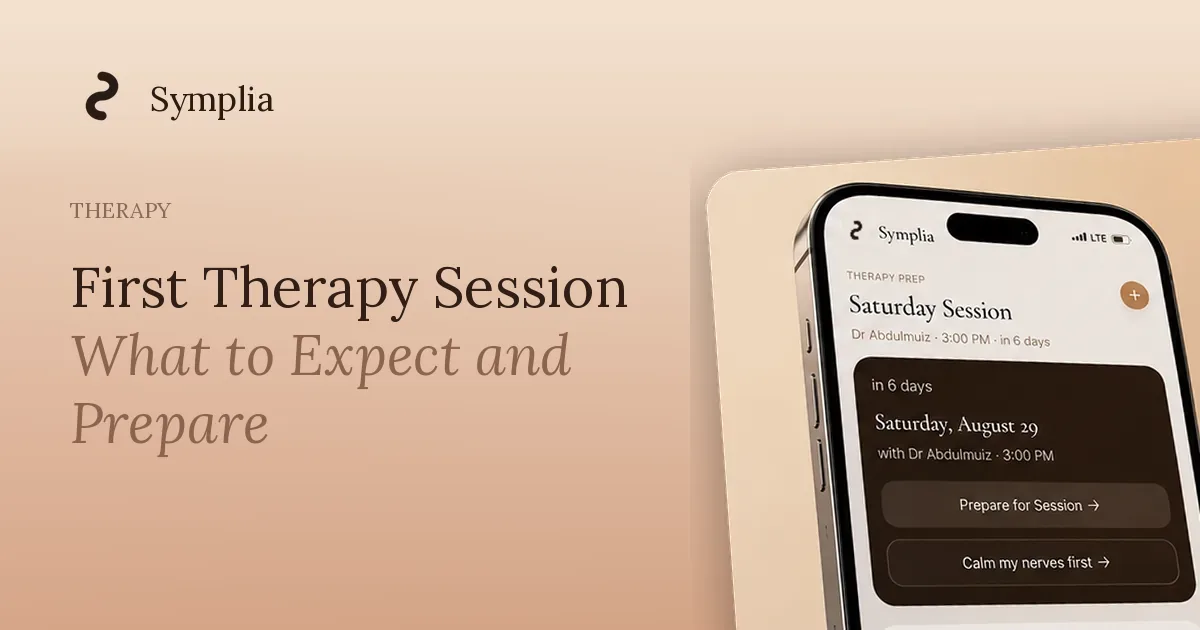
In a first therapy session, you and your therapist usually get to know each other. Expect questions about what brought you in, your history, and what you hope to change, plus some practical talk about confidentiality, fees and scheduling. You do not need to have everything figured out or tell your whole story. Many people find that a few notes written beforehand make the hour feel much less overwhelming.
This guide covers what typically happens, what you might be asked, how to prepare in about 15 minutes, and what to do if the first session does not feel right. Every therapist works differently, so treat this as a general picture rather than a script.
What usually happens in a first session
Sessions vary by therapist, country and type of therapy, but many first sessions follow a similar shape:
- Introductions and logistics. Your therapist explains how sessions work, how long they last, fees, cancellation rules and how to reach them between sessions.
- Confidentiality. You are usually told what stays private and the limits, such as situations involving serious risk of harm. Ask them to explain it in plain words if anything is unclear.
- Your reasons for coming. You will probably be asked what made you decide to start now.
- Background. Expect some questions about your history, relationships, work or study, sleep, and previous experience with therapy.
- Goals. Together you start working out what you want from therapy, even if the answer is "I just feel stuck."
Some therapists use the first session mainly for assessment and do less of the deeper work. That is normal. The first hour is also your chance to judge whether this person feels like a good fit.
Questions your therapist might ask
You may hear questions like these:
- What brings you to therapy now?
- How long have you been feeling this way?
- What does a hard day look like for you?
- Who do you have around you for support?
- Have you tried therapy or other support before, and what was that like?
- What would you like to be different in a few months?
You can answer in your own words, at your own pace. It is fine to say "I am not sure," "I would rather come back to that," or "that is hard to talk about yet." A good therapist will not push you past what feels safe.
How to prepare in 15 minutes
You do not need a perfect plan. A short, honest note to yourself is enough. Try this:
- Minutes 1 to 5: Write down why you are starting therapy, in a sentence or two. Messy is fine.
- Minutes 6 to 10: List the main things you have noticed lately: moods, sleep, stress, relationships, thoughts you keep coming back to. Add two or three recent examples.
- Minutes 11 to 13: Write what you hope will change, even vaguely.
- Minutes 14 to 15: Write two or three questions to ask them. The post on questions to ask your therapist has plenty of ideas.
Bring the note and read from it if you need to. Therapists are used to this, and it often helps you say the things you might otherwise forget or soften. For a longer method, see how to prepare for a therapy session.
A first-session note you can copy
- I am coming to therapy because...
- Lately, the hardest thing has been...
- Something that happened this week that shows it...
- What I hope is different in a few months...
- Something I am nervous to say...
- What I want to ask you...
If you are not sure what to say beyond this, what to talk about in therapy offers specific topics for when your mind goes blank.
Practical things to sort out beforehand
- Logistics. Check the time, location or video link, and whether you need to complete forms in advance.
- Cost. Confirm the fee and cancellation policy. The therapy cost calculator can help you plan sessions over a month.
- Space. For online sessions, choose a private spot and test your connection.
- Aftercare. If you can, leave some quiet time after the session. It can stir up feelings, and a few minutes of writing helps you keep what mattered. Post-session journaling covers how.
What if the first session feels awkward?
Awkward is common. You are talking about personal things with a stranger, and many people feel nervous, tearful, flat or even relieved. None of these means you are doing it wrong.
Fit matters too. One session may not tell you everything, but if you feel dismissed, judged or unsafe, it is reasonable to try someone else. Therapy tends to work better when you feel able to be honest with your therapist.
When to get support right away
Therapy is not an emergency service. If you are in crisis or thinking about harming yourself, contact a licensed professional, your local emergency services or a crisis line in your country now. Do not wait for your first appointment.
Where Symplia fits
Symplia is a private mental health app for tracking, journaling and reflecting between sessions. Many people use its Session Prep to jot down notes before an appointment, and you can choose what to share with a therapist. It is not therapy, not a diagnosis and not an emergency service. See session prep to learn more.
Try Symplia free at app.symplia.app. Monthly and Annual plans include a 7-day free trial.
Frequently asked questions
How long is a first therapy session?
Many sessions run around 45 to 60 minutes, though the first can be a little longer. Your therapist should tell you when you book.
Do I have to talk about everything in the first session?
No. You can share what feels manageable and say you would rather come back to something later. Trust usually builds over several sessions.
What should I bring to my first therapy session?
Bring any forms you were asked to complete, payment details, and a short note with your reasons for coming and a few questions. A written note is perfectly acceptable.
Is it normal to cry or feel nothing in the first session?
Yes. People react in many ways, including tearfulness, nervousness, numbness or relief. Whatever you feel is useful information to share.
What if I do not click with my therapist?
Fit matters, and it is fine to try someone else. You can say so directly or simply not book another session; many therapists understand this.
Will my therapist diagnose me in the first session?
Some therapists start forming an assessment early, while others take longer or do not use diagnoses at all. If you are curious, you can ask what they are looking for and how they will use it.